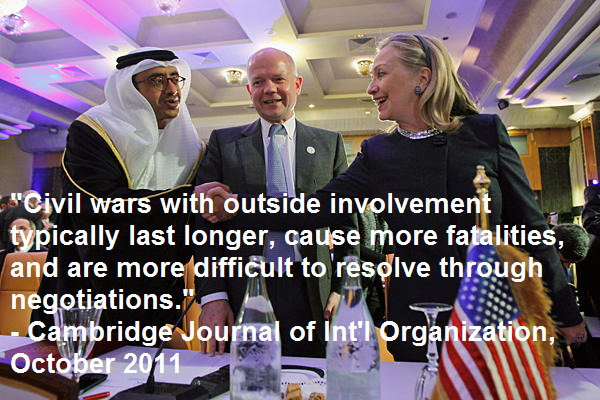
Thursday, July 4, 2013

Preliminary Thoughts on Egypt's Coup/Revolution/Crazytime


Wait.  What Just Happened?

Here's how I see it, based on what I've read and conversations with Egyptian people somewhat in-the-know.

In January 2011, massive popular demonstrations throughout Egypt convinced the Egyptian military that continuing to rule Egypt through Hosni Mubarak was not a viable option.  They forced him to step down, and promised democratic elections.

At the same time, they were furiously negotiating with the largest, most organized opposition group in Egypt - the Muslim Brotherhood.  The negotiations resulted in a deal: the military would aid the Muslim Brotherhood in its rise to power, and the Brotherhood would respect the military's autonomy and considerable economic interests.  The military rulers of Egypt would keep their villas, and the Brotherhood would take power.

The Brotherhood won in relatively free and fair parliamentary and presidential elections in 2012.  The yearlong rule of the Muslim Brotherhood's president Mohammad Morsi was characterized by economic tailspin, a violent crime rate that tripled, the disintegration of police authority in many parts of the country, vicious attacks on Christians and Shia Muslims, rampant sexual violence against women, and political violence from the Muslim Brotherhood's armed factions against its opponents.

Mohammad Morsi wrote the grim epitaph of his stunningly incompetent, tone-deaf, evil presidency last month, when he appointed a former terrorist responsible for massacring scores of foreigners and Egyptians in Luxor province...as governor of Luxor province.

No, for real.  That happened.

Christians, liberal Muslims, and other opponents of the Brotherhood organized a campaign called "tamarod," or "rebellion," and called for massive anti-Morsi rallies on June 30, the one-year anniversary of Morsi's inauguration as president.  They gathered some 22 million signatures on a petition calling for his removal and for new elections.  (Morsi won the election with slightly more than 13 million votes.)

Driven by desperation at the course the new Egypt was taking, these protests may well have been the largest in world history. (I've heard the number 33 million bandied about, but who can say?) After a day of this, the military decided that Morsi was no longer a reliable protector of their portion.  They gave him - with a straight face - 48 hours to "meet the people's demands." Morsi went on TV and gave a desperate speech, yelling over and over again, "I am the president of Egypt!," forgetting that:


Morsi was unable to resolve all of Egypt's political problems in 48 hours, and the military threw him out.

Boom.

Tahrir Square in Cairo.

What Will Happen Now?

The Facebook page NOT A COUP currently has over 12,000 likes.  The protestors are insisting that this is a popular revolution, not a military coup.

The popular protests triggered the chain of events that led to Morsi's fall, to be sure.  But there's a reason the Egyptian popular revolution has now displaced two presidents, while the Syrian popular revolution has devolved into a horrific war.  In both cases, the military's decisions were the driving factor.  Syria's Alawite-dominated military has thrown in its lot with their president.  The Egyptian military is willing to chuck their president when necessary.

What it isn't willing to do is let go of its autonomy and economic power.

My guess is that the Egyptian military will now try to install another president - through popular elections, no doubt - who has the support of the people, but will protect the military's interests.

(They may also move to cement a military dictatorship.  See below.)

Because the Egyptian military is terrible (massacring peaceful Christian protestors and such), the new president will probably be a terrible person.  But terrible people can still guarantee a modicum of prosperity and peace. (See, the Great, Cyrus, and Obama, Barack.) That's not what worries me.

What worries me is: what is the Muslim Brotherhood going to do now?

After 80 some years of state persecution, they are finally given the chance to participate in a free presidential election, and they win, fair and square.  And now, that president has been overthrown.

Egypt's Islamists have engaged in armed resistance against the government before.  When the Algerian military overthrew a freely-elected Islamist president in 1991, it triggered a ten-year civil war in which 200,000 people died.

And now Egypt is surrounded by chaotic countries full of loose weapons and Islamist militias that are better-connected and more motivated than they've ever been. (Syria, Gaza, Iraq, Libya, Sudan, Mali.)

"A message to the church of Egypt, from an Egyptian Muslim: if you conspire  to bring Morsi down, that will be another matter. [T]here are red lines—and our red line is the legitimacy of Dr. Mohammad Morsi. Whoever splashes water on it, we will splash blood on him."

- Safwat Hegazy, Muslim Brotherhood cleric, December 2012

“Measures announced by the armed forces’ leadership represent a full coup categorically rejected by all the free men of our nation."

- Dr. Mohammad Morsi, July 3, 2013

Might Egypt become the eleventh Arab country to have a post-independence civil war?  And might that give the military just the excuse it needs to put itself in power again - and permanently?

Buckle up, kids.  This is gunna suck.

Isn't there a chance that this is a genuinely democratic moment that will lead to a brighter future for the people of Egypt?


Thursday, June 13, 2013

U.S. Sending Weapons to Syrian Rebels: A Grief-Stricken Attempt at Analysis

Hello America.

Can we talk about what just happened?

Great, thanks.

On August 20, 2012, President Obama announced that the use of chemical weapons in Syria by the Assad regime was a "red line" that would "change his calculus" in deciding how to intervene in Syria.

A month and a half ago, after evidence of small-scale chemical weapons use in Syria apparently became impossible to deny, the White House admitted that:
"Our intelligence community does assess with varying degrees of confidence that the Syrian regime has used chemical weapons on a small scale in Syria... Given the stakes involved, and what we have learned from our own recent experiences, intelligence assessments alone are not sufficient — only credible and corroborated facts that provide us with some degree of certainty will guide our decision-making ..."
Translation: We're pretty sure, but not sure enough to do anything about it.

Last week, the Assad regime retook the strategic town of Qusayr in western Syria from the rebels, with the help of Hezbollah fighters.  Thousands of Hezbollah fighters have entered Syria from Lebanon to fight for the regime, and regime forces are heading north to Aleppo to retake Syria's largest city once and for all.

As Samuel L. Jackson said in Quentin Taratino's most recent film, "Lo and behold!  Out of nowhere!" the administration now concludes that all the evidence is in on chemical weapons in Syria:
Today, we are providing an updated version of our assessment to Congress and to the public.  ...Following a deliberative review, our intelligence community assesses that the Assad regime has used chemical weapons, including the nerve agent sarin, on a small scale against the opposition multiple times in the last year.
So said Ben Rhodes, President Obama's deputy national security adviser, in a statement today.

Reuters is reporting that Obama has now authorized direct weapons transfers to the Syrian rebels.

Do not believe for a second that this decision is based on the Syrian government's chemical weapons use - which is responsible for less than a fifth of one percent of the casualties in this war.

This decision came about because the Assad regime, with the help of Hezbollah, gained the upper hand.

Our government was only to happy to watch Syrians dying en masse, as long as its enemies were losing.  Now its enemies are winning, and our government aims to correct the problem by sending weapons to its enemies' enemies, including groups affiliated with al Qaeda, who have pledged to cleanse - and are cleansing - Syria of its non-Sunni Muslim population.  60 Shiite Muslims were massacred in eastern Syria on Tuesday.

There's really nothing else to say.  I feel like I'm watching a train wreck from a mile away.  The human catastrophe that's approaching is so obvious, and I can't do anything to stop it.

Please pray for Syria.

Saturday, May 18, 2013

A Week in God's Country


In Lebanon, the land rises steadily from the coast, a series of green mountains racing each other east towards a pinnacle in the center of the country.  At Harissa, where an enormous statue of the Virgin Mary watches over the country, I can peer down into the Christian coastal town of Jounieh, south along the coast to Beirut, the capital, and up the coast all the way to Byblos.  The Mediterranean Sea stretches out before me for long miles, seeming almost to rise into the distance like another mountain.  While it is bright and sunny where I stand, out over the sea, layers of clouds obscure the horizon, gray near the sea and dark black above.  A gigantic waterspout dips out of the cloud layer, skirts the surface of the sea, and retreats back into the firmament without making a sound.


If a multitude of press reports are to be believed, farther north up the coast, past Byblos, past Tripoli, in the Syrian town of Baniyas, pro-government militias are going “house to house, killing entire families and smashing men’s heads with concrete blocks.”

This trip to Beirut with Christian Solidarity International, the human rights group I work for, was my first visit to the Middle East since I left Syria in May 2011, when the country’s burgeoning anti-government uprising had claimed “only” a few hundred lives, and all of Syria’s main cities were intact.

On the coast of Lebanon, there are few tangible signs of the carnage taking place on the other side of the mountains.  The schools are open, the streets are clogged with traffic, and construction is booming. 

But you cannot avoid Syria’s war in Lebanon.  Already, 500,000 people have flooded into Lebanon from Syria to escape the fighting.  This, in a country of four million.

Among the refugees are two families I know from my time in Damascus.  On this trip, I get to see them again.  It is the greatest encouragement I’ve had in a while.  It proves to me that my time in Syria wasn’t a dream, and that this terrible war hasn’t destroyed everything I knew there.  Life is going on, at least for these people.

The first is an Iraqi Christian family who fled to Syria from Baghdad when their father was kidnapped by al Qaeda in 2007. “I think I might be the only Iraqi kidnapping victim who was released,” he tells me.

His captors tortured him for four days, and called his wife, telling her that she would have to pay $200,000 to get him back.  This, they said, would be their payment for living as Christians in a Muslim country.

My friend told them that they should go ahead and kill him, because “this is the short life, and the long life is still ahead.  But when we stand together before God, I will get my rights from you and your children.”

At last, the kidnappers let my friend go.  They said, “You can live, but we will take your house.  That will be your payment.”

The family fled to Syria after that, as did close to a million other Iraqi Christians fearing abductions, church attacks and massacres.  Iraq's pre-U.S. invasion Christian population was 1.4 million.  My friends settled in a Christian neighborhood of Damascus called Jaramana.  They tell me that it is Jaramana, and Syria, that they remember most fondly.

Starting last August, Jaramana was rocked by several huge car bomb attacks, and countless smaller explosions, despite its lack of military targets.  Scores of civilians were massacred.  My friends decided to leave after the first one.  Their youngest son, just 9, was suffering from psychological trauma, and the father was spooked by the large numbers of armed men walking the streets. “People knew me in Iraq, and I was still kidnapped,” he tells me. “Anyone could have kidnapped me there.  I decided not to wait.”     

I ask their son what he remembers from Iraq.  He remembers their house, and the giant toy car he had, and that his grandma’s house was right next door, and she would call to him and his brothers through the window whenever she made sweets.

The family now lives in a rough-and-tumble Christian neighborhood in Beirut.  The main street is dominated by an outpost of the Christian Lebanese Forces Militia, which announces its presence with a large wooden cross and two dozen posters of Pierre Amin Gemayal, a Christian anti-Syrian politician who was assassinated seven years ago.

The family is not registered with the Lebanese government.  The father apologizes for not seeing me off to the airport when I leave Lebanon; he doesn’t want to risk any contact with military or police personnel, who might deport them back to Iraq.


My friend, being a good host, tries to find a taxi for me to the airport, but after absorbing a million refugees from Palestine and Syria, the Lebanese have become perhaps understandably (if not justifiably) hostile to foreigners.  The cab drivers hear my friend's Iraqi accent, and give him terrible prices.  He sarcastically shouts "Shokran!" (thank you!) and walks away from each one.  One man drives after him, offering to bring his price down, but my friend will have none of it. "I don't deal with bastards," he tells me.

"Michael" was 15 when I last saw him in Damascus.  We agree to meet at an ancient church along the Dog River, where millennia of invading armies, starting with the ancient Egyptians, have carved their names into a cliffside as they passed through Lebanon.

Michael is taller now, and his voice is deeper, but he's still the thoroughly kind, gentle-hearted, completely sincere young man I remember being so out of place among his coarse classmates.  Sometimes he jokes: "I used to like the color orange, but General Aoun ruined it for me." Sometimes he is deadly serious. "I hate Lebanon," he tells me as we sit on the rocky shorefront, the glistening sea in front of us, the great peninsula of Beirut to our left, the beautiful green hills of Mount Lebanon to our backs. "I want to leave.  I want to go anywhere else but here and Syria."

Michael's family is from Aleppo, from a Christian neighborhood that became a frontline in the battle between regime forces and rebels.  Michael never saw the fighting, but he heard the explosions and felt the high-rise where he and his family lived shake.  After four days without electricity or water, they decided to leave for Turkey.  Their only real scare was when they saw the "terrorist" (rebel) flag flying in a town their bus was passing through, and realized the rebels had seized it.  Men with large guns approached the bus before their commander realized they were just refugees, and waved them through after checking their ID cards.  Michael's older brother was asleep at the time, and his nervous mother told the guards he didn't have an ID card.  Amazingly, the guards accepted this preposterous story. "They are so much stupid!" Michael's brother tells me, laughing.

I want to see where he's living now, so Michael takes me by bus high up into the mountains, a third of the way to the Syrian border, to a region dotted by churches and statues of a sword-wielding prophet Elijah.  Michael lives with his older brother and older sister in a flat in a dank, cold apartment building with a breathtaking view of a green valley stretching all the way down to the sea.  Electricity and water are only on for a few hours a day.  Black, angry mold grows on all the walls.  I'm frightened by it, but I don't know how to tell them that.

It's safe here, he and his older brother explain, because it's a Christian area, and the Christian Lebanese know what it's like to be at war with Muslims, so they are taking care of Christians who come from Syria.  Michael, his older brother and his older sister all have jobs - a rarity for refugees in Lebanon.  But Michael has had to drop out of school, because the Lebanese curriculum is too French-centric.  Michael's English is beautiful, but French, with its all of 110 million native speakers, is keeping him from getting an education.

Michael's parents, meanwhile, have returned to Aleppo to continue their jobs in government banks while their younger son completes his crucial 9th grade year at his school there.  Regime forces have decided to set up a military outpost right next to the school, which means the area is often the scene of fighting.

I also meet with some Syrian Christian refugees with my boss, as part of our efforts to find ways to help Christians fleeing the conflict.  One of them, "Basel," arrives at the monastery before my boss comes down from his room.  I introduce myself to him, and we exchange pleasantries in Arabic. "Where are you from?" he asks. 

"I'm from America," I respond.

Immediately, Basel tenses up. "What are your goals here?" he asks.

Later, after trust has been won, he confides in me that I made him nervous when I told him my nationality.  From the perspective of Syrian Christians, America's role in their country's civil war is so destructive that merely meeting an American inspires fear.  But after speaking with me and my boss for a few hours, Basel's natural Syrian hospitality takes over again, and he insists that I visit his temporary home for tea and cookies (which I do.)

Basel is from Homs.  He provides me with a straightforward map of the conflict.  For the first six months of the uprising, the revolution was largely peaceful, with only light arms being used on occasion.  After the sustained government violence against protestors, the revolutionaries began to arm themselves, and Islamic fighters flooded into the country to join the fight.  The Christian neighborhood of Hamidiyye in Homs became a frontline in the fighting, and most of the Christians fled.  Their homes were subsequently occupied by the rebels, who refused to allow them to return.  Today, the entire neighborhood has been laid waste in the fighting.

Basel and his friends tell me that many Syrian Christian men, including them, have sought refuge in Lebanon, not because the conflict directly threatened them, but because the Syrian government has begun selectively drafting Christian men into the army.  Unlike Muslims, the reasoning goes, Christians can be counted on not to defect and join the rebels.  The government is also organizing Christians and other religious minorities threatened by Islamist rebels into a "national defense army," a network of local militias loyal to the government.

Michael's brother also tells me that the government has been handing out weapons to Christians in Aleppo, and that some have accepted them.  The church, however, opposes this.  Michael's family is Orthodox, and his brother tells me that the Orthodox Church forbids carrying weapons, even for self-defense. "Killing is killing," he says.

This is a hard word, and not all Middle Eastern Christians can accept it.  During the 19th century, tens of thousands of Lebanese Christians were massacred by Muslims and Druze, and during World War I, 120,000 Lebanese died in a famine perpetuated by the Ottoman Muslim rulers of Lebanon.  The French carved out Lebanon as a safe space for Christians in the region, much as the British helped the Zionists establish Palestine as a safe haven for world Jewry.  When Lebanon's growing Muslim population, fueled by an influx of hundreds of thousands of Muslim Palestinian refugees, tried to overturn this arrangement, Lebanon's Christian government and militia movements responded with extreme violence.

The civil war lasted from 1975 to 1990, featured invasions from Israel, Syria, and the U.S., and killed nearly 120,000 people.  Both sides committed horrendous atrocities: Christians point to the village of Damour, where Palestinian militiamen massacred the Christian population, and Muslims point to Sabra and Chatila, Palestinian refugee camps where Christian militias conducted a similar massacre seven years later, after the assassination of Lebanon's Christian president-elect.

Beirut, once known as the "Paris of the Middle East," was a center of the civil war's violence.  Today, Beirut is running from that history.  Scores of giant construction cranes dot the skyline, busily building depressingly-modern hotels and shopping malls on the ruins of millennia of history wiped out in the war.  I have two encounters with the Lebanese military in Beirut while walking about on my free day.  The first comes when I take a picture of the Holiday Inn, a giant structure completed just before the civil war started which soon became a prime sniping post.  Its empty, bombed-out hulk still looms over the city.  The soldiers scold me for taking a picture of it.  This is forbidden.


The second comes when I try to find Beirut's last surviving Jewish synagogue, whose location is marked in my tourist handbook.  I arrive at the entrance to the road the synagogue is located on, only to find it blocked by a gate and an Army checkpoint. "Can I walk this way?" I ask one of the soldiers. "No, it is closed," comes the curt reply. "What are you looking for?"

"Oh nothing."

Apparently the one thing a country divided between Christians, Sunnis and Shiites can't handle is a publicly-accessible synagogue.

Despite this vigilance, the leftovers of the war are impossible to miss.  The Green Line, which separated Muslim West Beirut from Christian East Beirut, is a massive wasteland in the heart of an otherwise packed metropolis.  The buildings along the Green Line that were destroyed in the fighting have been bulldozed, but nothing has yet taken their place.  The headquarters of the Christian Phalange party, set in a beautiful 19th-century French mansion on the east border of the Green Line, are completely surrounded by giant cement blast walls, giving the whole mansion the appearance of a giant cement box.  The rival militias, still active, still armed, mark their territory with posters, flags and graffiti.  Do you see green cedar trees, red crosses, posters of Pierre Gemayal, graffiti that reads "Fuck Turkey"?  You must be in a Christian neighborhood.  Green flags, posters of Mousa Sadr or Hassan Nasrallah, pictures of the Dome of the Rock?  Shiite terrority.  Hammers, sickles and mustachioed men?  A Communist neighborhood.  "There is no god but God" in white Arabic letters on black background?  Hide.

Nearly everyone I speak to is convinced that war is coming to Lebanon again.  The country's balance of power is too tenuous, and the Syrian conflict too overwhelming.  The same sectarian groupings that define the Syrian war - Sunni, Shiite, Christian, Alawite, Druze - exist in Lebanon, and already, Lebanese militias are crossing the border to fight for their respective allies.  Violent clashes between Sunni, Shiite and Alawite forces have already taken place in Beirut and Tripoli.  The flood of Palestinian refugees into Lebanon helped trigger the last civil war.  500,000 Syrian refugees have already entered Lebanon, and if Syria's Sunni rebels take power in the Alawite heartland north of Lebanon, that number could increase by millions as Alawites flee the takeover. "Lebanon is close to the breaking point," the director of a Christian NGO in Beirut tells me.

But the cause of the coming new Lebanon war could be darker than a mere refugee influx.  Al Qaeda and like-minded Salafist groups are on the rise across the region.  Once viewed as a collection of psychopaths bringing destruction on the whole Muslim world, Al Qaeda has now become the leading name in Sunni Arab nationalism from Iraq to Lebanon.  In Iraq, Al Qaeda is the leader of the resistance against the near-dictatorship of the U.S.-installed Shiite Prime Minister Nouri al-Maliki.  In Syria, Al Qaeda's affiliate Jubhat al-Nusra is by far the most effective and (among Sunnis) most popular rebel group fighting the Alawite regime.  In Lebanon, the al Qaeda flag has begun making appearances at Sunni anti-government protests.

Lebanon's peace, when it has existed, has always been rooted in a balance of power between Shiites, Sunnis, and Christians.  They comprise relatively equal proportions of the population, and none can dominate the other.  Cooperation is essential to governance.

If Lebanon is considered together with Syria, however - as most Muslims consider them - Sunnis comprise an overwhelming majority in the region.  If Sunni Salafist rebels succeed in overthrowing the Syrian regime, is it believable that they will stop there, and respect the borders drawn up by Christian imperialists 100 years ago?  Jubhat al-Nusra has already proclaimed the "Islamic State of Iraq and Syria." How hard would it be to add Lebanon to that list?

As all the Syrian Christians we speak to on this trip recount, the slogan, "Christians to Beirut, Alawites to the grave!" has been heard chanted in the streets of Syria since the earliest days of the revolution.  As chilling as it is, it also strikes me as deeply disingenuous.  Christians to Beirut?  Guys, we’ve been over this.  120,000 people died in the 1980s over the question of whether or not the Christians could have Beirut all to themselves – and the answer you settled on was a decided no.

This is Lebanon today - a heartbreakingly beautiful country, where all you can see in every direction is signs of war past and the war to come.  "If Lebanon is in danger, we will be there," proclaims a giant poster of Pierre Amine Gemayal hanging on the side of the Phalange bunker.  Pierre has been dead now for seven years.

"The people of this region have good hearts, but that's not enough," a Syrian Christian nun who's taking care of 400 Christian refugee families on the Syrian coast tells me. "Their minds must be changed as well."

What can we do when we see a man-made disaster approaching so clearly, and so unavoidably?

We pray.  We feed the hungry and homeless.  We preach the gospel of peace and justice to our neighbors and our government.

And we wait.
Christian Solidarity International is providing aid to displaced and suffering Christians inside Syria, where the church is being targeted for religious cleansing by Islamic extremists.  You can donate to these efforts at our website: www.csi-usa.org.


Thursday, May 2, 2013

More Uncomfortable History

Sometimes, I read more than one book at the same time. Often, really. Probably because I lack the patience to focus on a single topic long enough to go one book at a time.

A few weeks ago, I started reading Islam Without Extremes: A Muslim Case for Liberty by Mustafa Aykol, a Muslim Turkish journalist. I'd read it before, but I wanted to reread it as an antidote to all the depressing news out of the Muslim Middle East lately.


Another book I'm reading is Preventing Genocide: Practical Steps Toward Early Detection and Effective Action, by Dr. David Hamburg.

Aykol argues that there is a long-running conflict between "rationalists" and "traditionalists" in Islam - the rationalists favoring reason and tolerance, the traditionalists seeking to subject all of human life to the tradition of Mohammad. The traditionalists, he says, have unfortunately usually been on top, but the rationalist side has broken through in some key moments in Islamic history. Moments like, say, the waning years of the Turkish Ottoman Empire.

His account of that period contains this description of the Ottoman sultan Abdulhamid II:
Sultan [Abdulhamid II] was far from being a narrow-minded reactionary. He continued modernization, making positive advances in education, legal reforms, and economic development, including the construction of railways and telegraph lines. …A pious Muslim, Abdulhamid nonetheless admired Western civilization and explicitly advised his fellow Muslims to learn from the Christians’ successful efforts to rid their faith of dogmatism and obscurantism. …Sultan Abdulhamid, a peacemaker and a reformer, also introduced “innovations” to the Islamic tradition. (pp. 158, 160)
Wow. What a great guy! Such a shame that the Ottoman Empire collapsed just forty years after he took power.


And then I start paging through Preventing Genocide. Particularly the opening chapters, which contain examples of past genocides that could have been prevented by concerted international action. Including this one:
From 1894 to 1896 the Ottoman sultan Abdul Hamid II was directly responsible for the massacre of perhaps as many as 100,000 of his Armenian subjects and indirectly responsible for an additional 100,000 deaths due to accompanying famine and disease.
Oh.

Well that's awkward.

Wednesday, February 27, 2013

Syria: What Is To Be Done?

Last week, I detailed U.S. policy towards Syria, and how terrible I think it its.


All well and good.  But what should we do instead?

I'll start by providing the answer given by my friends Gabe Huck and Theresa Kubasack, the founders of the Iraqi Student Project, who lived in Syria for half a decade, and stayed in Damascus long after car bombings became a weekly event:
-       Simply recognize how much we have lost with the Syrian people since their great rejoicing in Obama’s election in 2008. Ask how we lost this glimmer of hope.
-       Lean on our friends, especially Saudi Arabia and Qatar and Turkey, to stop fanning flames, especially but not only with weapons and money to the opposition in Syria.
-       Stop being of any assistance in arms going into Syria through Turkey.
-       Assist far more with aid to Syrians living in refugee camps in Turkey, Jordan and Lebanon.
-       Stop demonizing Iran and recognize they have to be included in any regional effort to end the violence.
-       Stop Israel from doing anything to any country including Gaza and the West Bank.
-       End sanctions against Syria on non-military goods.
-       understand how failure to stand up to Islamophobia in the US destroys our credibility.

Now, for the longform:

It may well be too late to save Syria.  Oceans of blood have been spilled by the regime.  Huge districts in Syria's largest cities are in ruins.  Nearly a million people have fled the country.  By one count, there are over a thousand independent militias fighting in Syria, most of them militant Islamist, all competing for weapons and territory.  The Kurds have already gained a large measure of autonomy, and are clashing with Arab rebels.  Videos are popping up online of little kids singing about how they want to kill all the Alawites and all the Shiites (i.e., 15% or so of Syria's population), cheered on by huge crowds of adults.  The modern state of Syria was an artificial creation of the French occupiers, and there may be no way to put it back together now that it has been shattered.

Paradoxically, though, it is precisely this horrific desolation that is now inspiring calls for peace from senior figures in both the regime and the opposition.

In December already, Bashar's vice president called for a peace settlement and a unity government, saying that the army could not win the war. (In an army-centric country like Syria, that's a huge deal.) Earlier this month, the leader of the opposition Syrian National Coalition and the regime's "minister of reconciliation" both offered to meet with their opponents on certain conditions.  On Monday, the regime's foreign minister for the first time offered to negotiate even with groups that are actively fighting the government, "because we believe that reforms will not come through bloodshed but only through dialogue."

And then, last Wednesday, as I was trying to write this post, I got interrupted by Russia - the regime's biggest foreign backer - and the Arab League - which expelled the regime - offering together to host peace talks.

These steps are encouraging.  But they're unlikely to be enough.  The Syrian Civil War is not just about Syrians fighting each other; it's about Americans and Russians and Iranians and Saudis and Turks and Chinese fighting each other.  They're simply using the Syrians to do it.

The Sunni powers of the Middle East - Turkey, Saudi Arabia, and Qatar - have spent the last decade worrying about the ascent of Shiite Iran, whose support for Islamic revolution and restive Shiite populations across the region threatens their own power.  The Assad regime is Iran's only Arab ally, and TSAQ (as I will refer to them from now on) are intent on taking it down, and replacing it with a Sunni regime that will get in line. (Syria is majority Sunni.)

Thus, even if the current leaders of the Syrian opposition signed on to a peace process, TSAQ could simply shift their support to groups who were willing to carry on the fight.  Finding them won't be hard.

The U.S. is going along with all this, because, obviously, we want to take Iran down a notch too.  Our policymakers no doubt find this very easy to justify to themselves.  After all, Assad is very bad.  And so is the Iranian regime.  And it's not as if we're actually killing anyone ourselves...

As for Russia, the Arab world was once its domain, its Cold War proxy against the U.S.'s Israel.  Today, Syria is the only Arab country left in the Russian camp.  The rest have flipped to the U.S./TSAQ camp.  Syria is also the location of Russia's only port in the Mediterranean Sea.  Russia is also in the midst of a decades-long war with Sunni Islamic terrorists in Chechnya, and is not eager to see Sunni Islamic terrorists take over just one and a half countries south of them.  The Russians probably know that supporting Assad is a losing battle, but with the U.S./TSAQ pursuing a winner-takes-all strategy in Syria, why on earth would they stop?

With the current dynamic, neither side in this proxy war has any incentive to change course - even though this course will end the in the destruction of Syria.  The U.S. must be the one to change course.  It can pursue its eternal quest for Middle East hegemony and deal a(nother) crushing blow to Iran, or it can save Syria.  It can't do both. 

If the U.S. truly wants to make peace in Syria, the president needs to get on the phone with Vladimir Putin stat.  He should give assurances of the U.S.'s respect for Russian interests in Syria, and ask for help in setting up a peace process between the two sides in Syria.  Russia should be amenable to this - they've already offered as much, and a political settlement in Syria is the only way to keep their influence there.

Russia can use its influence with the Assad regime to support those regime elements in favor of peace.  Meanwhile, the president needs to get on the line with the leaders of TSAQ, and ask them to do the same with the opposition.  Heavy arms can no longer flow with abandon into Syria to any group willing to fight the regime.  Support must be restricted to groups that sign on to the peace process and are committed to minority rights in Syria - and TSAQ must help bring groups that aren't to heel.  Persuading TSAQ will be difficult, but not impossible.  One imagines that the long-term consequences of turning Syria into Somalia are starting to dawn on an Iran-obsessed TSAQ.

What should a peace deal look like?  I'm gonna go out a on a limb here and say irrelevant.  Whatever it takes to stop the killing for five minutes and let people think rationally again.  Syria is slouching towards genocide.  In a situation like that, there's no such thing as a bad peace.  Bashar leaving is a given.  He can crash on my couch.  As for the rest, the U.S. and Russia should figure out an agreement that is minimally acceptable to both sides and then push it hardcore until it's done.

For posterity, here's a video of a much smarter man than me (the Lebanese-Christian AUB Professor Habib Malik) saying pretty much the same thing nine months ago.  50,000 dead Syrians haven't proved him wrong:


Last week, Russia's foreign minister, Sergey Ravlov, said of the Syrian Civil War, “Neither side can allow itself to rely on a military solution to the conflict, because it’s a road to nowhere, a road to mutual destruction of the people.”

Sure, he's a flunky for a self-obsessed, rock-band-jailing petro-tyrant.  Isn't it embarrassing that he's the one saying this, while our State Department prattles on about "the legitimate aspirations of the Syrian people" every week?

By God's grace, it may not be too late.

Monday, February 18, 2013

Happily mistaken

Prediction:

The United States will attack the government of Syria this year.

...

If I’m wrong, as my roommate Matt thinks (he has a better sense for domestic politics than I), I will happily run around with egg on my face. 

 - Jefferson Aero Plane, February 18, 2012

As my grandpa helpfully pointed out to me the last time I saw him, the United States did not attack the government of Syria this year.  My bad. 


Also, good job Matt.  Way to be smart.
 

While I'm happy to be wrong, I guess this leaves my credibility in shreds.  Just like these people's:
 

"The Assad family has no more than a few weeks to remain in control in Syria."
- Israeli Defense Minister Ehud Barak, January 2, 2012
 

“There’s a different leader in Syria now. Many of the members of Congress of both parties who have gone to Syria in recent months have said they believe he’s a reformer.”
 

 - Secretary of State Hillary Rodham Clinton, March 27, 2011
 

"Notice that more-stagnant countries like Syria and North Korea have remained more stable."
- Fareed Zakaria, February 3, 2011

Here's to having less war than we might have otherwise had!

Friday, February 15, 2013

What is the U.S. Doing in Syria?


In one sentence?  Pouring fuel on the fire.

U.S. policy towards Syria has three parts: Humanitarian aid, aid to the armed Syrian opposition, and sanctions.

Humanitarian Aid

Two weeks ago, President Obama released this video, explaining to the Syrian people what the U.S. was doing to help them.


At the 0:55 mark he says this:

“American aid means medicine and treatment for hundreds of thousands of patients in Damascus, Daraa and Homs. …American aid means winter supplies for more than half a million people in Aleppo, Homs and Dayr az-Zour.  And we’re working with allies and partners so that this aid reaches those in need.”

Damascus, Daraa, Homs, Aleppo, Dayr az-Zour.

What do those places have in common?

They are all under the control of the regime.

According to McClatchy Newspapers, “The United States has deferred to the United Nations in distributing food and other aid to Syria’s displaced, but the U.N. won’t enter any part of Syria without the government’s permission.”

This effectively means that the very regime the U.S. is trying to overthrow (more on that later) is controlling who gets the humanitarian aid we send to Syria.

So, for instance, the Atma refugee camp, home to 20,000 refugees, directly across the border from Turkey?

No aid.

Reports Al-Jazeera English: “The UN channels all its aid through Damascus and the main distributor of this aid is the Syrian Arab Red Crescent which operates predominately in government-controlled areas.  …Aid workers inside Damascus tell us that even aid earmarked for disputed areas outside of the city is often commandeered by government soldiers never to be seen again.”

Last week, State Department officials told reporters that 49% of food aid going in to Syria was reaching “contested areas.” Roy Gutman of McClatchy notes that “they didn’t say which side controlled those areas.” Al-Jazeera: “The [Syrian Arab Red Crescent]'s own website lists the areas it has distributed aid to in Aleppo. All are held by the regime.

In short, if you're a Syrian unlucky enough to be living in opposition-controlled territory, or territory that is viewed as disloyal by the regime, as far as the U.S. is concerned, that's just too bad for you.

Which is ironic, considering the second plank of our Syria platform:

Aid to the Armed Opposition

If you’re a keen observer of the Syrian Civil War, you might ask yourself how it is that the Assad regime, for forty years the most feared police state in the Middle East, just twenty-three months after picking a fight with unarmed protestors, is now deploying tanks, snipers, artillery, helicopters and planes against its foes in a death match for Syria’s two largest cities – and is losing?

The erosion of popular support for the regime is the smaller part of the explanation.  The bigger part of that story is that the armed opposition is being funded, armed, and organized by foreign powers – all of them close U.S. allies.

Here I’ll let Scott Stewart of Stratfor take over:

There have been numerous videos released showing Syrian rebels using weapons such as the M79 Osa rocket launcher, the RPG-22, the M-60 recoilless rifle and the RBG-6 multiple grenade launcher. [Those are really good weapons.] …What is so interesting about these weapons is that they were not in the Syrian military’s inventory prior to the crisis, and they all likely were purchased from Croatia. [i.e. – someone foreign is giving them to the rebels.]

This means that the current level of external intervention in Syria is similar to the level exercised against the Soviet Union and its communist proxies following the Soviet intervention in Afghanistan.

Obligatory Charlie Wilson’s War clip:


It’s a given that Turkey, Saudi Arabia, Qatar, the UAE and other Sunni Muslim states are funneling these weapons to the rebels.  It’s also a given that the U.S. knows about this, and is encouraging it under the table.

What we have in common with these states is a desire to see Iran’s only Arab ally, the Assad regime, toppled.

What we don’t have in common with these states is a healthy respect for democracy, pluralism and human rights.  There’s no reason to think they wouldn’t be thrilled to see Sunni Islamists come to power in Syria.  If anyone’s looking for a clue, all four of these states have Christian populations of under 1%.  In all four cases, that’s by design, not chance.  Syria’s Christian population is over 10% - for now.

In June, the New York Times reported that the CIA was helping the reconstituted Syrian Muslim Brotherhood, Saudi Arabia, Qatar, and Turkey funnel “automatic rifles, rocket-propelled grenades, ammunition and some antitank weapons” into Syria.

Ostensibly, the CIA is doing this to prevent these weapons – which, it’s worth repeating, can blow up tanks – from falling into the “wrong” hands.  I have no earthly idea what they mean by “wrong.” In the words of Swedish Syria expert Aron Lund:

By November 2012, the ideological spectrum of Syria’s armed movement had narrowed to one ranging from apolitical Sunni conservatism or rural sufism, across the Muslim Brotherhood’s ikhwani Islamism, to the rigid ultra-orthodoxy of salafism. There was little or no room for secular ideologies.

Besides these covert moves, the U.S. is overtly providing tens of millions of dollars of “nonlethal aid” to the Syrian rebels, including intelligence and communications equipment.

Last week, outgoing defense secretary Leon Panetta revealed that President Obama had vetoed a plan to directly arm the Syrian rebels, a plan supported by the State Department, the Defense Department and the CIA.

To me, this reveals a lot about our president’s feeble sense of morality.  He’s willing to give the rebels nonlethal aid, and to give loads of military aid to countries that are giving the Syrian rebels weapons, and to help those countries give the Syrian rebels weapons – but give them weapons directly?  That’s where he draws the line.

The only practical effects of Obama’s refusal to go all the way are that the war will be prolonged, and the victorious rebels will have less reason to listen to us when we raise the issue of rights for religious minorities in the new Syria.

Sanctions

The third piece of the U.S.’s Syria policy is a draconian set of economic sanctions it has imposed with the help of its allies (currently including every country that neighbors Syria except for Iraq – and, well, it’s Iraq.  They’d be able to help more, but they have their own history with U.S. sanctions.)

Supposedly these sanctions are directed at the regime, not the Syrian people.  Funny thing: when the regime owns the country’s entire banking system and most of its economy, this is what happens to the people when you sanction the regime:

- Syria’s economy shrunk by 20% in 2012.
- The Syrian pound has lost half its value against the dollar since the conflict started.
- Wheat and barley production has dropped by over half in the past year.

True, American-led sanctions aren’t responsible for all of this.  But they certainly haven’t helped.

According to David Ignatius at The Washington Post, “U.S.-led economic sanctions appear to have backfired, much as they did in Iraq in the 1990s, hurting poor and middle-class people while allowing regime loyalists to get even richer.” Ignatius cites a report from Syrian opposition leaders calling the sanctions effort “the epitome of failure”:

“The regime is capable of bypassing most sanctions by using non-U.S. and non-Western productions. . . . It’s the Syrian people who do not have the means and the connections to bypass these sanctions. …These conditions have produced the largest transfer of wealth from the people to the government supporters. Under the current shortages and rising prices, the only businessmen who can sustain a profitable business are the ones who have military might at their disposal to protect their convoys.”

The report explains the effects of the U.S. embargo on diesel fuel into Syria this way: “Of course the military gets first dibs on [the fuel that does come in], and the civilians bid up the price of what is left.”

Ignatius: “Desperate for heating fuel, poor people are burning plastic and tree leaves.”


In this crazy era, it's unimaginable that there could be a major civil war in the Middle East without the U.S. being involved in at least some way.

I will outline what I'd like to see the U.S. do in Syria next week.  A preview - I'd like us to use our tremendous influence to discourage people in Syria from killing each other.

Alternatively, if the U.S. government was really super-convinced that Bashar al-Assad and his regime were beyond the pale, irredeemable, there's a number of ways they could force him out.  They could work out a deal with the Russians to stage a coup in Damascus.  They could enforce a no-fly zone over Syria, to keep Assad's planes from carpet bombing Syria's cities.  They could, you know, blow up Assad's house.  We can blow up just about anything these days, or so I hear.

We are doing none of those things.  Instead, we are strangling Syria's economy, dumping weapons on the country, dumping food and medical aid in the lap of the regime we claim to despise too much to even talk to, to distribute as it sees fit, and then standing back, posing as the voice of moral outrage, and offering up platitudes about the Congo.

There is no moral universe in which this is the right thing to do.