Wednesday, October 3, 2012

Another Reason I Can't Vote for Obama

From whitehouse.gov:

MEMORANDUM FOR THE SECRETARY OF STATE

SUBJECT: Determination with Respect to the Child Soldiers Prevention Act of 2008

Pursuant to section 404 of the Child Soldiers Prevention Act of 2008 (CSPA) (title IV, Public Law 110-457), I hereby determine that it is in the national interest of the United States to waive the application of the prohibition in section 404(a) of the CSPA with respect to Libya, South Sudan, and Yemen; and further determine that it is in the national interest of the United States to waive in part the application of the prohibition in section 404(a) of the CSPA with respect to the Democratic Republic of the Congo, to allow for continued provision of International Military Education and Training funds and nonlethal Excess Defense Articles, and the issuance of licenses for direct commercial sales of U.S. origin defense articles; and I hereby waive such provisions accordingly.

BARACK OBAMA
 
Translation: In 2008, Congress passed a law banning the U.S. from sending military aid to countries that use child soldiers.  It was actually necessary for them to do that.  Chew on that for a second.

Senator Barack Obama voted for that bill.

But even though Yemen, South Sudan, the Democratic Republic of Congo and Libya all use child soldiers, President Obama has just authorized his administration to send them military aid anyway.

This is the third year in a row Obama has done this.

But hey, Romney might not give us free birth control.


"When a little boy is kidnapped, turned into a child soldier, forced to kill or be killed - that's slavery.  It is barbaric, and it is evil, and it has no place in a civilized world."
 
- President Barak Obama, September 2012 
 

Thursday, September 27, 2012

Who I’m Not Voting For

I’m trying to work out who I should vote for in this infernal presidential race.  Your feedback would be greatly appreciated.

I’m striving not to be the petulant 24-year-old self-righteous know-it-all.  I know there is no such thing as a perfect candidate, and I accept the logic of voting for the lesser of two evils.  If one of the major party candidates was likely to move the United States significantly closer to peace and justice, I would swallow my moral objections and vote for that person.
However, I also feel that that logic only works up to a point.  I believe it is possible for a candidate (or the forces/system he represents) to be so evil, so corrupt, that there are no circumstances under which it is ethical to vote for him.  At some point, we have to make a stand on principle.
To use a very, very extreme example: if the Nazis were running against the KKK, it would not be right to say, “Well, the KKK is the lesser evil, so I’m going to be mature and vote for them.” The only moral choice would be to abstain or to vote third party.
So.
Let’s start with our current president.
A list of things I disagree with him on would stretch forever (and not be particularly interesting.) Here are the things that, I think, put him beyond the pale – that make it actually unethical for me, as a Christian, to vote for him.
  • He tried to use raw executive power to force religious institutions to financially support activities they saw as immoral.
  • He has done nothing to reduce the abortion rate.
  • He has done nothing to address America’s looming debt crisis (which, I think, will be a fatal crisis), other than endlessly imply that it could be solved if we just taxed millionaires “a little more.”
  • He has killed hundreds of civilians in Pakistan, Yemen and Somalia with drone strikes, while opting to count all military-age males who die in such strikes as “militants” – a policy that General Ratko Mladic is currently on trial for in The Hague.
  • Rather than pushing for peace in Syria, he has placed the United States firmly on one side in Syria’s ethno-religious civil war, supporting a bloc of armed Sunni Islamists in their bid to overthrow the Syrian government and, in all likelihood, cleanse the country of non-Sunni communities.
  • His administration has continued America’s post-World War II habit of lavishing billions of dollars in cash and weapons on governments that engage in horrendous, systematic human rights abuses, laying the groundwork for generations of war, oppression and ethnic cleansing, all for the sake of the U.S.’s momentary geopolitical advantage. (Here I’m thinking of Pakistan, Saudi Arabia, Egypt, Iraq, Afghanistan, and – sad to say – Israel and South Sudan.)
  • He collaborated with Saudi Arabia to put down a popular uprising in Bahrain against Bahrain’s sectarian dictatorship.
  • Rather than either withdrawing from Afghanistan immediately or fighting through to a semi-successful conclusion, he opted to send tens of thousands of additional American troops into Afghanistan, and then quietly withdraw them without any improvements on the ground.  The only motive I can discern here is political expediency.  Nearly 1,500 Americans and only the Good Lord knows how many Afghans were killed as a result.
Rhetorically, Mitt Romney differs from Obama only on the first three points. In actual practice, I think he would differ only on the birth control mandate.
Why are these two men, who are both – why sugarcoat it? – complicit in mass murder, the only two options?
BECAUSE WE HAVE MADE IT SO.  Because we have given these two parties our votes time and time again.  The only way to make it not-so is to withhold our vote from them – or at least give it to a third party, so we don’t show up in the statistics as lazy bums who don’t care about democracy.
Right now, I’m thinking Green Party.  But I’m open to recommendations.
Besides, if we’re being all practical and stuff, I live in the District of Columbia – not exactly a swing state.
Besides, Obama’s gonna win anyway.


UPDATE: The great Adam M. writes in to say, "In reference to your latest blog post, go to isidewith.com, take their imperfect but helpful quiz, and then tell me if, like me, it leads you to research and consider voting for the Justice Party."

I took the quiz, and it told me to vote for Jill Stein of the Green Party. However, the Justice Party has an intriguing name...more investigation is required.

Wednesday, September 26, 2012

People I Met in South Sudan Last Week


David seems to be in his late teens.  He has only one hand; his right arm ends in a clean stump.  When he was much younger, during the war, he tried to pick up an unexploded piece of ordnance.  It went off, and blew off his hand.

He has been living with a pastor whose ministry to war orphans is supported by Christian Solidarity International, the group I work for.  He is very shy, but speaks pretty good English. 

Biwan is a young (maybe 8 years old) survivor of polio, a disease that still occurs in South Sudan.  His legs are crippled, and his older brother, Ayak, carries him around on his back.  On this trip, we are able to give him a hand-powered tricycle, which will allow him to move around on his own.

Marco was freed from slavery four years ago through the efforts of the Sudanese Government's Committee to Eradicate the Abduction of Women and Children (CEAWAC).  My boss, Dr. John Eibner, met him at the time and gave him some food and a survival kit.  He sees us on the street while walking to school in his uniform and greets us.

I can't tell how old Marco is, but he seems far older than his 6th grade classmates.  Marco was often tied down and beaten by his master, especially when he refused to pray like a Muslim.  The right side of his body is partially paralyzed, and he walks with a limp.  He never found his family.  He is infectiously cheerful, and tells us he wants to be a teacher some day.

About five thousand enslaved people were retrieved and sent home by CEAWAC.  The group's head publicly estimated that 35,000 people remained in slavery in North Sudan, before the group was summarily shut down by the government.

Nyibol is 10 years old, and was freed from slavery on this trip.  When she was about three years old, her master tried to separate her from her parents.  They refused and tried to resist.  Her master had them tied up, and cut their throats while she watched.  Her older cousin looked after her after that.  She also came home through CSI's network.

Manoot is about 15 years old, and was freed from slavery on this trip.  He was enslaved with his mother and brother when he was very young.  He remembers seeing the slave raiders slitting the throats of wounded villagers who fell during the attack he was captured in.  His mother tried to escape with him and his brother, but their master's relatives found them and killed her.

Manoot's brother was already liberated by CSI.  Hopefully they will be reunited soon.

Garang is 12 years old, and was freed from slavery on this trip.  When he was about four, his parents – also enslaved – were working in the peanut field.  He cried for his mother to come nurse him.  While she was feeding him, the master came and shouted at her, “Why aren’t you working?” He took a gun and started shooting at her.  She escaped, but a stray bullet hit Garang in the lower leg.  His leg is bowed and disfigured, and he walks with a limp.  Both his parents ran away, and he never saw them again.

Garang does not know his parents’ full names, and does not know their home village in the South.  Finding his family, if he has any, will be nearly impossible.

My boss asks him what he will do now.  He says he doesn’t know, unless we have any ideas.

My boss asks him if he would like to come back to the village where CSI is based and live with one of our South Sudanese staff members.  He will get plenty of food and will be able to go to school.

Our staff member translates the question.  Garang motions at the survival kit at his feet, which has been distributed to all the slavery survivors. It contains a blanket, a mosquito net, a pan for boiling water, farming tools, and other basic necessities. “Will I be able to keep this?” he asks.

We tell him he can, and he hops in the land cruiser with us for the three-hour ride back to our compound.

Deng is in his mid-teens, and was liberated from slavery in April of this year.  When he arrived back in the South, he had huge open wounds on his legs.  His master had beaten him there because he asked to go to school instead of looking after the goats.

After staying with CSI's field physician for a while to have his wounds treated, he went looking for his parents, and eventually found them.  They gave him a big hug, and told him they were happy to see him again.  He also learned that he has a brother and a sister.  They all live together now, and Deng is going to school and attending a Pentecostal church.  "I like praying to God," he says.

While we are in South Sudan, he visits us at the compound nearly every day.  When we pack up our tents to leave, he goes around with a broom, cleaning the mud off of them. (It's the rainy season - I'll complain about it another day.) "Apotapai," I tell him - Dinka for "thank you." He smiles, looks at the ground, and replies, "Yes."

Wednesday, August 29, 2012

Mind-Blowing Facts from "A Peace to End All Peace" (Part 1 of a series)

As most followers of Middle Eastern politics know, the flags of the Arab world are all very similar.  Most of them feature some combination of black, red, white and green, horizontal stripes, sometimes a star or a crescent, and sometimes a sideways triangle on the left side.
There a few weirdos like Somalia and Qatar, but most of them follow this pattern.

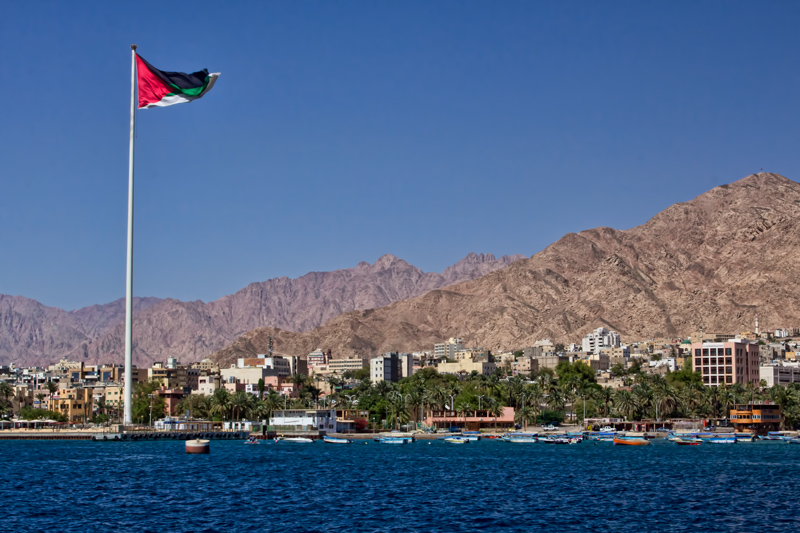
This is because most Arab flags were based on the flag of the Arab revolt during World War I.  These Arab rebels from Mecca helped Britain fight against the Ottoman Empire.  In return, they were (supposed) to get their independence:


The flag of the Arab revolt still flies above the Jordanian port city of Aqaba, where the Arab rebels scored their first major victory:


So where did this flag, and with it, the flags of nearly all the modern Arab states, come from?

According to David Fromkin's book A Peace to End All Peace, it was designed entirely by Sir Mark Sykes. (P. 315).

As in, Sir Mark Sykes of the Sykes-Picot Agreement.

If you're a Middle East nerd, your mind is already blown.  If you're not, the Sykes-Picot Agreement was a secret agreement between Britain and France to divide the Middle East between themselves after the war.  They did so, and and the Arab revolt against the Ottomans was followed by 30 years of European colonization in Palestine, Syria, Lebanon, Iraq, and elsewhere.  And when the Europeans left, the Arabs were left with totally unworkable borders. (See: Palestine, Syria, Lebanon, Iraq and elsewhere.)

The Sykes-Picot Agreement is reviled throughout the Middle East as the original sin of the Zionist-Western Conspiracy to Screw the Arabs.

And Mark Sykes, the British diplomat who negotiated that agreement, created the Arab flag.

MIND.  BLOWN.

That's as ironic and embarrassing as if the U.S. flag was designed by King George III, or, say, mostly based on the flag of Britain's infamous East India Company.

A Peace to End All Peace is one of the most informative, most entertaining books on the Middle East I've ever read.  More mind-blowing facts will be posted here as they come!

Tuesday, August 21, 2012

Todd Akin and The Unspeakble

On August 19, 2012, Missouri Congressman Todd Akin, a Republican candidate for the Senate, said this when asked in a TV interview whether he supported keeping abortion legal in cases of rape:


"It seems to me, first of all, from what I understand from doctors, that's really rare.  If it's a legitimate rape, the female body has ways to try to shut that whole thing [pregnancy] down."

Today is August 21, 2012, and after 48 hours of furious blowback, it seems certain that Akin's political career is over.  He must decide in the next hour whether or not to stay on the ballot, but the Republican National Committee, most GOP PACs, Mitt Romney, and nearly everyone else has withdrawn their support. Akin has cut a humiliating ad asking voters for forgiveness, but it seems certain he will not receive it.

Todd Akin has spoken the unspeakable.  He must go.

I don't disagree with this conclusion.  For my own part, I'm simply shocked that a grown, married man who wanted to be a member of the most powerful legislative body on earth could be so ignorant about rape and human reproduction.  I'm also disturbed by his implication that some rape victims are less innocent than others, and that this distinction should have any bearing on abortion law.  I certainly don't want to see him in the Senate.

But it's led me to wonder why certain moments of unguarded candor lead to political destruction, while others do not.

Consider this statement from journalist Thomas Friedman in May 2003:


And the relevant excerpt:

"What they [Middle Easterners] needed to see was American boys and American girls going house to house, from Basra to Baghdad, and basically saying, 'Which part of this sentence don't you understand?  You don't think we care about our open society?   Well suck on this!' That was what this war was about.  We could have hit Saudi Arabia.  We could have hit Pakistan.  We hit Iraq because we could.  That's the real truth."

In context, the "this" in "suck on this" refers to a recently-completed bombing campaign and ground invasion that killed thousands of civilians and tens of thousands of Iraqi soldiers, crippled or maimed tens of thousands of people for life, and destroyed much of Iraq's critical infrastructure.

Surely, on balance, Friedman's defense of this deliberately-created horror on the grounds that Middle Easterners needed to be intimidated (terrorized?) is a far worse rhetorical sin than Akin's ignorance about the crime of rape. Even President Bush, when he was making his case for war, had to argue that the invasion, with all its attendant horrors, was the only alternative to the much greater threat posed by Saddam's weapons of mass destruction.  He would never have dared to say, "It's because we can."

Friedman's analysis elicited outrage in antiwar circles on the internet, but in few other places - much like Secretary of State Madeleine Albright's statement that the deaths of hundreds of thousands of Iraqi children under the UN sanctions regime were "worth it." (We could multiply examples here, obviously.)

Friedman has gone on to author multiple bestsellers, and remains a widely-read and respected columnist at the New York Times.

I don't really have a complete thought to offer here, unless it's this: our taboos tell us a lot about our society.

Ordering the deaths of thousands of Arabs?  Not taboo.

Defending the killing of thousands of Arabs because other Arabs "needed to see it"? Not taboo.

Fighting to criminalize abortion, even in the case of rape?  Not taboo. (Stick around, though.)

Fighting to criminalize abortion while not understanding the basics of the female reproductive system?  Hit the showers.

Hmmm.

Monday, August 6, 2012

The places we used to know

In October 2010, I accompanied the priest in charge of the Damascus youth seminary where I worked on a trip to Homs, Syria, to attend the wedding of his friend.  The wedding was held in a new, very nice church building full of huge murals depicting scenes from the Bible:


This mural, representing the resurrection of Christ, is one of the coolest things I've ever seen:


This mural, showing the baptism of Christ, hung above the alcove where the baptismal font was kept:


Today, BBC News carries a great story about Syrian Christians who have been forced to flee their homes by Islamist rebels aligned against the regime of Bashar al-Assad.  The story carried this picture from Reuters of a church in Homs that was savaged in fighting between rebels and the regime:


Definitely the same place.

90% of Homs' Christians, including the family of my friend Samer, have fled their homes.  In the nearby city of Qusayr, mosques that normally broadcast the call to prayer broadcast warnings to local Christians to either join the revolution, or leave.  One man who left Qusayr with his family was pulled over by rebels when he tried to return to his supermarket to get some food.  When they learned that he was a Christian, they shot him dead.

For generations, Syria has been a place of refuge for Christians and others fleeing ethnic and religious violence, whether Armenians fleeing Turkey's anti-Christian genocide in 1915, Palestinians forced out of their homes in the first Arab-Israeli war, Iraqi Christians fleeing attacks after the fall of Saddam Hussein, or South Sudanese trying to escape North Sudan's genocide from 1983-2005.

I don't know if it's possible to stop the whirlwind of violence that appears to be destroying that old Syria.  But we should bear witness.  And as long as our leaders claim to be spreading democracy in the Middle East, we should ask them: what about the Christians (or the Alawites, the Yezidis and the Mandeans?)

Thursday, August 2, 2012

Mmm...Justice!


Thanks to my housemate Chris for buying me some last night.  Made for a great lunch today!