Regarding my earlier post, Mr. Weiss was gracious enough to write a detailed reply to my letter. Essentially, he believes that the current self-designated leadership of the Syrian opposition is liberal and non-sectarian (which I don't disagree with, but doesn't assure me that Syria's future will be liberal and non-sectarian), and that most of the Christian expressions of support for Assad are coerced to some degree. He passed along this video made by someone in the Syrian revolution, which shows Christians standing with Muslim protestors in a number of Syrian cities. (The Arabic text at the beginning says, "Christians and Muslims: One Hand."
This morning, the Catholic News Agency carries commments by a Christian bishop from Aleppo, Syria: Antoine Audo of the Chaldean Catholic Church.
The "fanatics" behind the Syrian uprising, he says, "speak about freedom and democracy for Syria but this is not their goal. They want to divide the Arab countries, control them, seize petrol and sell arms."
Pointing to neighboring Iraq, where half of the Christian population has been killed or driven away, he said, “We do not want to become like Iraq. We don’t want insecurity and Islamization and (to) have the threat of Islamists coming to power."
But what about the crimes of the Assad regime? Audo claims that there is a "war of information" being waged agaisnt Syria by "BBC and Al Jazeera, there is an orchestration to deform the face of Syria to say the government does not respect human rights and so on."
So...the government really does respect human rights? Audo: “Syria has a secular orientation. There is freedom. We have a lot of positive things in our country.”
What do the people think? "Syria must resist – will resist. 80 percent of the people are behind the government, as are all the Christians."
Audo sums up his feelings this way: “We want peace and security ... we do not want war and violence and we very much hope that in the next few weeks the situation will be better.”
In all of this, Audo is parroting the line of the Syrian government perfectly. There's the Arab nationalism, the wild accusations against BBC and al Jazeera, the call to "resist" the lone "fanatics" who have somehow brought one of the world's premier police states to the brink of collapse without any popular support. And since this is Syria, the question is, did he mean it? Or does he understand that his job, and perhaps his life, would be worthless if he said anything different?
My best guess is: both.
I heard the same lines from most of my Christian friends in Damascus, in private conversation. I know those conversations were not coerced. The Christian support for Assad is real, and their fear of the Islamists is real.
Consider Audo's line: “Syria has a secular orientation. There is freedom. We have a lot of positive things in our country.” This isn't just crazy talk. Before the uprising started, I had never felt safer anywhere than in Syria. Syria is a country where you can walk alone in a big city in the middle of the night, without fear. There is no terrorism, no war, no food insecurity. Combine all that with protection from religious persecution, which Assad provides better than any other Arab leader, and it's easy to see why Christian feel they have everything to lose in this revolution.
One of my Christian friends once asked me, "Which is more important - freedom or security?" It wasn't a rhetorical question. He wasn't some pretentious American 20-something who's never faced a day of insecurity in his life grandstanding against the Patriot Act - he was a Middle Easterner. His country borders Lebanon, Palestine and Iraq, and he meant it. I tried to answer with something trite like, "You can't have one without the other," but he wasn't buying it, and neither did I. Another Syrian friend told me, after he had to change his Easter travel plans due to the violence, "I was never scared in my life until the uprising started." Would you trade the ability to go visit your parents in a neighboring town without your van being shot at by snipers for the right to vote? Neither would I.
This is the dynamic I see in Syria. It's extremely corrosive to the church's role as a prophetic voice (e.g., "Do not shed innocent blood in this place!" - Jeremiah 22:3), but it's reality. And after all, the American church doesn't have a lot of room to talk.
Is Audo's claim that 80 percent of the people stand with the government true? I have no idea, and neither does anybody else. I'm fairly certain he's right about the Christians supporting Assad. He could very well also be correct about the 80 percent. A police state is far more susceptible to dissent and discontent than a democracy; 20 percent of the population can wreak a lot of havoc. This is not to say, of course, that 80 percent of the people love Bashar and want him to rule for the next thirty years, only that 80 percent of the people prefer that outcome to violent revolution.
Wednesday, June 15, 2011

Saturday, June 11, 2011
Down the Memory Hole

Sarah Palin has a new Facebook note (don’t judge me, alright?) entitled, “Obama’s Strange Strategy: Borrow Foreign Money to Give to Foreign Countries.”
Palin opens with this blast of plain-speakingness: “Should we be borrowing money from China to turn around and give it to the Muslim Brotherhood?” Oh snap! Oh no she didn’t! Oh yes she did.
“Given,” Sarah gives, “that we are running massive deficits and are drowning in more than $14 trillion in debt, and despite not knowing who will rule Egypt until its election this fall, this strange strategy may be the end result given President Obama’s announcement that he is committing $2 billion to Egypt’s ‘new government.’”
“Now,” she continues, “given that Egypt has a history of corruption when it comes to utilizing American aid, it is doubtful that the money will really help needy Egyptian people.”
Exactly – because nothing has changed in Egypt in the last six months, right? No massive, popular, nonviolent uprising against a dictator the U.S. paid off for three decades? Maybe it has something to do with that “new government” you so helpfully put in quotation marks in the last paragraph? Just checking.
“Couple that with the fact that the Muslim Brotherhood is organized to have a real shot at taking control of Egypt’s government, and one has to ask why we would send money (that we don’t have) into unknown Egyptian hands?” Sarah asks.
Good point! I wonder what we can do to make sure the Brotherhood doesn’t take over. Show the Egyptian people that the U.S. stands with them in their revolution? That they don’t need to resort to Islamic extremism to be independent and secure? What’s a practical gesture we could make to help convince them? Let’s brainstorm that one.
Sarah’s post garnered 3,838 comments. I skimmed through fifty of them. None challenged Sarah on Egypt; two challenged the GOP’s tax policy.
One of these commenters wrote, ”Its [sic] amazing how this 'ignorant' woman can make a common sense statement that points out the stupidity of our leaders. Would like to see just what they teach in those IVY league schools to produce these elite pundits.”
Ugghh…
MAYBE they teach that every year for the past thirty years the United States has both borrowed money from China and given $2 billion in aid to Egypt? That six presidents and sixteen congresses stood behind that policy without controversy? That the only thing that’s different this year is that there’s a chance our aid money will be spent to better the lives of the Egyptian people, rather than line the pockets and fund the security forces of a corrupt, murderous regime?
There’s a reason we spend so much money on education, Ivy League or otherwise, a reason we don’t simply watch CNN to inform ourselves, a reason we don’t just whip out our "common sense" and make spot decisions when it comes to issues like, I don’t know, the biggest political upheaval in the Arab world since 1918. Understanding the world requires context, history, and an ability to at least guess at how our actions look to people on the receiving end.
I’m not exactly sure why this sets me off so. Part of the reason might be that I stayed up late last night arguing on Facebook with an educated Muslim Egyptian man, who is convinced that the CIA is responsible for the violent clashes between Christians and Muslims in Egypt in the last few weeks.
God save us from our respective stupidities.
Wednesday, June 8, 2011
Open Letter to Michael Weiss of the Henry Jackson Society
Mr. Weiss,
I am writing to you about your recent piece in Slate, “Meet the Syrian Opposition.” I recently returned from nine months of living and teaching in Syria, and while I completely share your sympathy with Syria’s liberal opposition, I fear the picture you’ve received of Syria from its opposition leaders is dangerously inaccurate.
You make much of the oppositionists’ claim that there is no sectarian divide in the opposition to Assad. I can tell you for a fact that there is. I lived and worked among the Christian community in Damascus, and never once met a Christian who did not support Assad. The Patriarch of the Greek Catholic Church praised him in his Easter Day homily. The Greek Catholic Church also hung a massive banner bearing the president’s face above the street leading to their patriarchate. Syrian Christians, in my experience, are terrified at the prospect of majority rule in Syria, and I cannot blame them for their fear, especially considering the Christian experience in Muslim-ruled Arab states. You write that, “The oppositionist in Hama, Syria's fourth-largest city, assured us that Christians had joined in Friday prayers at the Great Mosque in that city.” To me, this is simply inconceivable, under any circumstances. I am 90% sure this is not true, and 100% sure that it does not reflect the attitude of most Syrian Christians.
In one paragraph of your article, you try to diminish the fear of an Islamist takeover of Syria by noting that the Muslim Brotherhood was “largely destroyed” in Hama in 1982, that it has been banned for decades, and that the opposition leaders disavow the Brotherhood. You finish with this sentence, “Notably, one slogan heard as early as the second week of protests was: ‘No to Iran, No to Hezbollah. We want Muslims that fear Allah.’” Why is this notable? Iran is a Shia-ruled state, and Hezbollah is a Shia Muslim organization. Syria is a majority Sunni country, and its Islamists are Sunni Islamists. This chant is exactly what we would expect to hear from Syrian Islamists: anti-Shia rhetoric. Despite the suppression of the Brotherhood, we must face up to the fact that for forty years, the mosque has been the only legal gathering place in Syria. We should not be surprised if the uprising has Islamist overtones.
Like you, I am aghast at the crimes of the Assad regime, I am terrified at what crimes it may yet commit in its craven fight for survival, and I am praying for its quick demise. But simplifying the story of the Syrian revolution to one of a righteous, united people struggling against the evil dictator is extremely harmful, especially when it comes to policy-making. The Syrian people are NOT united. Assad won’t allow them to be. He and his father have spent the last forty years asphyxiating any kind of social organization that didn’t depend on their favor for its survival, and when he goes, he will leave a gaping void. There is a very real risk of sectarian civil war in Syria. If we don’t face up to that, we only make that war more likely.
Thank you for working to bring these events into the public consciousness. May we celebrate the liberation of Syria soon.
Respectfully,
Joel Veldkamp
PS: Did you choose the photo that ran with your piece in Slate? The protesters in the photo are clearly demonstrating in support of Assad. I thought it was a curious choice.
I am writing to you about your recent piece in Slate, “Meet the Syrian Opposition.” I recently returned from nine months of living and teaching in Syria, and while I completely share your sympathy with Syria’s liberal opposition, I fear the picture you’ve received of Syria from its opposition leaders is dangerously inaccurate.
You make much of the oppositionists’ claim that there is no sectarian divide in the opposition to Assad. I can tell you for a fact that there is. I lived and worked among the Christian community in Damascus, and never once met a Christian who did not support Assad. The Patriarch of the Greek Catholic Church praised him in his Easter Day homily. The Greek Catholic Church also hung a massive banner bearing the president’s face above the street leading to their patriarchate. Syrian Christians, in my experience, are terrified at the prospect of majority rule in Syria, and I cannot blame them for their fear, especially considering the Christian experience in Muslim-ruled Arab states. You write that, “The oppositionist in Hama, Syria's fourth-largest city, assured us that Christians had joined in Friday prayers at the Great Mosque in that city.” To me, this is simply inconceivable, under any circumstances. I am 90% sure this is not true, and 100% sure that it does not reflect the attitude of most Syrian Christians.
In one paragraph of your article, you try to diminish the fear of an Islamist takeover of Syria by noting that the Muslim Brotherhood was “largely destroyed” in Hama in 1982, that it has been banned for decades, and that the opposition leaders disavow the Brotherhood. You finish with this sentence, “Notably, one slogan heard as early as the second week of protests was: ‘No to Iran, No to Hezbollah. We want Muslims that fear Allah.’” Why is this notable? Iran is a Shia-ruled state, and Hezbollah is a Shia Muslim organization. Syria is a majority Sunni country, and its Islamists are Sunni Islamists. This chant is exactly what we would expect to hear from Syrian Islamists: anti-Shia rhetoric. Despite the suppression of the Brotherhood, we must face up to the fact that for forty years, the mosque has been the only legal gathering place in Syria. We should not be surprised if the uprising has Islamist overtones.
Like you, I am aghast at the crimes of the Assad regime, I am terrified at what crimes it may yet commit in its craven fight for survival, and I am praying for its quick demise. But simplifying the story of the Syrian revolution to one of a righteous, united people struggling against the evil dictator is extremely harmful, especially when it comes to policy-making. The Syrian people are NOT united. Assad won’t allow them to be. He and his father have spent the last forty years asphyxiating any kind of social organization that didn’t depend on their favor for its survival, and when he goes, he will leave a gaping void. There is a very real risk of sectarian civil war in Syria. If we don’t face up to that, we only make that war more likely.
Thank you for working to bring these events into the public consciousness. May we celebrate the liberation of Syria soon.
Respectfully,
Joel Veldkamp
PS: Did you choose the photo that ran with your piece in Slate? The protesters in the photo are clearly demonstrating in support of Assad. I thought it was a curious choice.
The Syrian Revolution: Media Siege
My photo album from the Syrian Revolution is here (don’t get too excited.)
When it comes to news, living in Syria is like living inside a black hole. You can see everything going on outside of Syria with perfect clarity. Inside Syria, you have no idea what's happening.
Before the revolution started, foreign journalists in Syria actively censored themselves to avoid being deported by the government. I once came across this line in a New York Times story about Syria: “The basic ‘red lines’ are well known: no criticism of the president and his family or the security services, no touching delicate issues like Syria’s Kurdish minority or the Alawites, a religious minority to which Mr. Assad belongs. Foreign journalists who violate these rules are regularly banned from the country (a fact that constrains coverage of Syria in this and other newspapers).”
When the revolution started, this effect was only intensified. We were never denied access to foreign media. All news websites (except for Israeli websites) were available on the internet, all the satellite news channels came through just fine, and I could openly buy Newsweek, TIME and the New York Times on the street. Foreign media, however, had no access to Syria. Nearly all foreign journalists were ejected from the country. They were forced, like me and every Syrian citizen, to get their information from their friends, from the state-controlled press, and from YouTube videos uploaded by the opposition.
Very rapidly, the state press constructed an internally consistent, alternative narrative of the “events” in Syria. The country, it claimed, had been infiltrated by armed gangs who were taking advantage of peaceful protests and sowing violence, chaos and sectarianism. They had been armed and trained by Israel, the United States, Saudi Arabia, and Saad Hariri’s Future Movement in Lebanon. They were murdering peaceful protesters and blaming it on the government, attacking government buildings, killing soldiers and police, attacking innocent travelers on the roads at night. Citizens of Deraa, Baniyas, Homs, Lattakia, etc. were begging – just begging – the army to come in and restore order. The government provided evidence for their narrative in the form of televised confessions from “arms smugglers” working for Saad Hariri and individuals who claimed to have been paid by Saudi Arabia to make fake videos of riots, and interviews with “eyewitnesses,” who spent most of their interview time chanting the president’s praises.
The most vigorous promotion of this narrative came from a “private” news channel called Ad-Dounia. Ad-Dounia would devote whole news programs to discrediting YouTube videos from the opposition. Of course, who is to stop government agents from uploading fake videos themselves for their clients in the press to systematically disprove? Kind of a 21st century straw-man argument. I am almost certain this was the case with one video I saw, where a flag-draped “protester” turns to the camera and says, “Ok, start filming” seconds before she is tackled by a supposed Syrian security agent. “Obviously, this was staged!” the news anchor informed us. Yes, obviously – why would these conspirators upload such a poorly-edited video onto YouTube? Hasn’t Saad Hariri ever heard of Windows Movie Maker?
My most fervently nationalist Syrian friends would hold up Ad-Dounia as proof of media independence in Syria. How can you possibly be so naïve? I would wonder – as they often did about me, when I told them that the CIA and Mossad couldn’t possibly be behind every bad event in the Middle East.
As you might guess, I never accepted the Syrian government’s narrative, because 1) it came from the Syrian government, 2) I couldn’t believe that in a country with an omnipresent secret police presence, such a vast conspiracy could be coordinated by foreign powers, and 3) after Egypt and Tunisia, and considering Syria’s 20% unemployment rate, unbelievable corruption and minority dictatorship, a foreign conspiracy was not needed to explain the country’s unrest. Yet it was extremely difficult to convince anyone who had bought into one narrative to accept the other. My conversations with my Syrian friend “Emmanuel” would go like this:
“Don’t believe the BBC; they lie!”
“Why would they lie? They’re an independent news organization. Why would they try to hurt the Syrian government?”
“Because they are a tool of the Western governments, and Syria is the only anti-Western Arab country! Besides, we know they’ve been lying!”
“How?”
“Didn’t you see that report on Ad-Dounia?”
“Yes, but Emmanuel, why do you believe the state press?”
“It’s not the state press, it’s private!”
“(Sigh). Fine, but even if the BBC reported an inaccuracy, you can’t really blame them, because your government is keeping them out of Syria, and preventing them from verifying anything!”
“I’m glad the government kicked them out! They are liars and saboteurs!”
In the end, we each had to choose which narrative to believe, to presuppose it, and then use it as a lens to examine everything else we heard. I chose to believe that the Syrian government was full of it, because it fit my political worldview. Emmanuel chose to believe his government, because as a minority, he saw the government as a source of protection, and badly wanted Syria to stay stable and peaceful.
Emmanuel was right about one thing: the BBC and Al-Jazeera got at least some things wrong. About four weeks into the protests, I went to visit a friend working in Hesseke, a town in northeastern Syria. That Friday afternoon, April 1, we walked all around the town (it wasn’t very big). We ate lunch, saw all the parks, and walked to some of the archeological sites. It a typical lazy day of prayer in Syria. Not many people were out. Traffic was light. We chatted and joked with some of the locals and soldiers we met on the street. Then we went back to his flat to cook dinner. When we got there, I got a frantic phone call from “Sadiiq” another Syrian friend of mine. “Joel, are you all right, man?” he asked.
“Yes, Sadiiq, I’m fine.”
“But there are huge protests in Hesseke! It’s on the BBC!”
“No…there’s nothing. We were just outside. We walked around the whole town!”
Later, my friend and I talked to one of his English-speaking friends, who told us that it was rumored that fifty men had gathered for about fifteen minutes outside the main mosque in Hesseke after prayers. This was reported as a “major protest” in the international media.
There were many events that neither narrative could adequately account for. State TV ran footage from the funerals of soldiers murdered by the “terrorists” (complete with music from The Lord of the Rings playing in the background). Were these funerals faked, and the soldiers merely invented? Were they shot by the government for refusing to fire on civilians, as the opposition claimed? Were there genuinely armed gangs inside the country with the power to attack the Syrian army? Who was attacking cars on the road from Beirut to Aleppo at night? The government, trying to sow instability and create a justification for its own crackdown? The pro-government mafia, known as the Shabiha, unleashed at last? Terrorists, trying to start sectarian troubles? No matter what you believe, you sound awfully paranoid.
A more recent example: The Syrian government claims that last weekend, 120 of their soldiers were killed by armed gangs in the northwestern town of Jisr al-Shughour. What happened there? An army mutiny? A government-directed purge, which is now being attributed to these seemingly omnipresent "armed gangs"? An attack by armed Islamists? A foreign attack? Desperate, enraged Syrian civilians striking back at the government at long last? At this point, I have no problem believing any of these scenarios.
In cases like these, reaching the truth isn't merely a matter of disbelieving the Syrian government. Once we throw out the official version, there's no way to answer the question, "What happened?" We are adrift in an ocean of ignorance, without landmarks or bearings. It's the ultimate existential crisis.
Now that refugees have begun flooding out of Syria into Lebanon and Turkey and sharing their stories, we have another stream of information to draw upon. But anyone following the events in Syria has to be aware that, until and unless the Assad regime falls, the reality of events inside Syria must remain a mystery - not only to us, but to the Syrian people. The Assad regime has successfully deprived its opponents of a common reality to operate in. Considering that these opponents may soon be the new power brokers of Syria, that's a pretty terrifying thought.
Check out this page at the Syrian Arab News Agency's website for a glimpse into the regime's alternate reality: The Reality of Events.
When it comes to news, living in Syria is like living inside a black hole. You can see everything going on outside of Syria with perfect clarity. Inside Syria, you have no idea what's happening.
Before the revolution started, foreign journalists in Syria actively censored themselves to avoid being deported by the government. I once came across this line in a New York Times story about Syria: “The basic ‘red lines’ are well known: no criticism of the president and his family or the security services, no touching delicate issues like Syria’s Kurdish minority or the Alawites, a religious minority to which Mr. Assad belongs. Foreign journalists who violate these rules are regularly banned from the country (a fact that constrains coverage of Syria in this and other newspapers).”
When the revolution started, this effect was only intensified. We were never denied access to foreign media. All news websites (except for Israeli websites) were available on the internet, all the satellite news channels came through just fine, and I could openly buy Newsweek, TIME and the New York Times on the street. Foreign media, however, had no access to Syria. Nearly all foreign journalists were ejected from the country. They were forced, like me and every Syrian citizen, to get their information from their friends, from the state-controlled press, and from YouTube videos uploaded by the opposition.
 | |
| A poster on Qamareyah St in the Old City, outlining the Conspiracy. |
Very rapidly, the state press constructed an internally consistent, alternative narrative of the “events” in Syria. The country, it claimed, had been infiltrated by armed gangs who were taking advantage of peaceful protests and sowing violence, chaos and sectarianism. They had been armed and trained by Israel, the United States, Saudi Arabia, and Saad Hariri’s Future Movement in Lebanon. They were murdering peaceful protesters and blaming it on the government, attacking government buildings, killing soldiers and police, attacking innocent travelers on the roads at night. Citizens of Deraa, Baniyas, Homs, Lattakia, etc. were begging – just begging – the army to come in and restore order. The government provided evidence for their narrative in the form of televised confessions from “arms smugglers” working for Saad Hariri and individuals who claimed to have been paid by Saudi Arabia to make fake videos of riots, and interviews with “eyewitnesses,” who spent most of their interview time chanting the president’s praises.
The most vigorous promotion of this narrative came from a “private” news channel called Ad-Dounia. Ad-Dounia would devote whole news programs to discrediting YouTube videos from the opposition. Of course, who is to stop government agents from uploading fake videos themselves for their clients in the press to systematically disprove? Kind of a 21st century straw-man argument. I am almost certain this was the case with one video I saw, where a flag-draped “protester” turns to the camera and says, “Ok, start filming” seconds before she is tackled by a supposed Syrian security agent. “Obviously, this was staged!” the news anchor informed us. Yes, obviously – why would these conspirators upload such a poorly-edited video onto YouTube? Hasn’t Saad Hariri ever heard of Windows Movie Maker?
My most fervently nationalist Syrian friends would hold up Ad-Dounia as proof of media independence in Syria. How can you possibly be so naïve? I would wonder – as they often did about me, when I told them that the CIA and Mossad couldn’t possibly be behind every bad event in the Middle East.
As you might guess, I never accepted the Syrian government’s narrative, because 1) it came from the Syrian government, 2) I couldn’t believe that in a country with an omnipresent secret police presence, such a vast conspiracy could be coordinated by foreign powers, and 3) after Egypt and Tunisia, and considering Syria’s 20% unemployment rate, unbelievable corruption and minority dictatorship, a foreign conspiracy was not needed to explain the country’s unrest. Yet it was extremely difficult to convince anyone who had bought into one narrative to accept the other. My conversations with my Syrian friend “Emmanuel” would go like this:
“Don’t believe the BBC; they lie!”
“Why would they lie? They’re an independent news organization. Why would they try to hurt the Syrian government?”
“Because they are a tool of the Western governments, and Syria is the only anti-Western Arab country! Besides, we know they’ve been lying!”
“How?”
“Didn’t you see that report on Ad-Dounia?”
“Yes, but Emmanuel, why do you believe the state press?”
“It’s not the state press, it’s private!”
“(Sigh). Fine, but even if the BBC reported an inaccuracy, you can’t really blame them, because your government is keeping them out of Syria, and preventing them from verifying anything!”
“I’m glad the government kicked them out! They are liars and saboteurs!”
In the end, we each had to choose which narrative to believe, to presuppose it, and then use it as a lens to examine everything else we heard. I chose to believe that the Syrian government was full of it, because it fit my political worldview. Emmanuel chose to believe his government, because as a minority, he saw the government as a source of protection, and badly wanted Syria to stay stable and peaceful.
Emmanuel was right about one thing: the BBC and Al-Jazeera got at least some things wrong. About four weeks into the protests, I went to visit a friend working in Hesseke, a town in northeastern Syria. That Friday afternoon, April 1, we walked all around the town (it wasn’t very big). We ate lunch, saw all the parks, and walked to some of the archeological sites. It a typical lazy day of prayer in Syria. Not many people were out. Traffic was light. We chatted and joked with some of the locals and soldiers we met on the street. Then we went back to his flat to cook dinner. When we got there, I got a frantic phone call from “Sadiiq” another Syrian friend of mine. “Joel, are you all right, man?” he asked.
“Yes, Sadiiq, I’m fine.”
“But there are huge protests in Hesseke! It’s on the BBC!”
“No…there’s nothing. We were just outside. We walked around the whole town!”
Later, my friend and I talked to one of his English-speaking friends, who told us that it was rumored that fifty men had gathered for about fifteen minutes outside the main mosque in Hesseke after prayers. This was reported as a “major protest” in the international media.
There were many events that neither narrative could adequately account for. State TV ran footage from the funerals of soldiers murdered by the “terrorists” (complete with music from The Lord of the Rings playing in the background). Were these funerals faked, and the soldiers merely invented? Were they shot by the government for refusing to fire on civilians, as the opposition claimed? Were there genuinely armed gangs inside the country with the power to attack the Syrian army? Who was attacking cars on the road from Beirut to Aleppo at night? The government, trying to sow instability and create a justification for its own crackdown? The pro-government mafia, known as the Shabiha, unleashed at last? Terrorists, trying to start sectarian troubles? No matter what you believe, you sound awfully paranoid.
A more recent example: The Syrian government claims that last weekend, 120 of their soldiers were killed by armed gangs in the northwestern town of Jisr al-Shughour. What happened there? An army mutiny? A government-directed purge, which is now being attributed to these seemingly omnipresent "armed gangs"? An attack by armed Islamists? A foreign attack? Desperate, enraged Syrian civilians striking back at the government at long last? At this point, I have no problem believing any of these scenarios.
In cases like these, reaching the truth isn't merely a matter of disbelieving the Syrian government. Once we throw out the official version, there's no way to answer the question, "What happened?" We are adrift in an ocean of ignorance, without landmarks or bearings. It's the ultimate existential crisis.
Now that refugees have begun flooding out of Syria into Lebanon and Turkey and sharing their stories, we have another stream of information to draw upon. But anyone following the events in Syria has to be aware that, until and unless the Assad regime falls, the reality of events inside Syria must remain a mystery - not only to us, but to the Syrian people. The Assad regime has successfully deprived its opponents of a common reality to operate in. Considering that these opponents may soon be the new power brokers of Syria, that's a pretty terrifying thought.
Check out this page at the Syrian Arab News Agency's website for a glimpse into the regime's alternate reality: The Reality of Events.
Thursday, June 2, 2011
More pictures than any reasonable person would ever take the time to look at
...are now posted on my Picasa page! Knock yourself out.
Bosra, Syria, once the capital of Roman Arabia.

Shabha, Syria, the town of Philip, the Arab emperor of Rome.

Byblos, Lebanon.

Tyre, Lebanon.

Sidon, Lebanon.

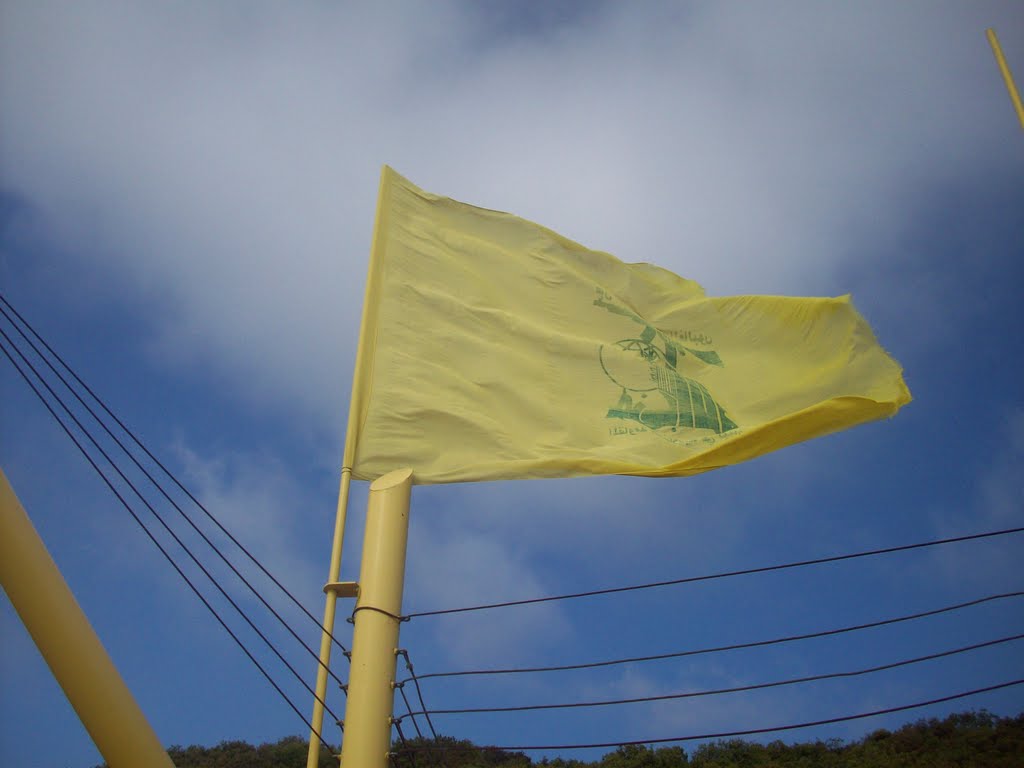
Hezbollah's "Resistance Tourist Landmark" in the Chouf Mountains of Lebanon.

Beirut, Lebanon.

Coming soon: a "best of" folder, and some commentary on Syria's Arab Spring.
Bosra, Syria, once the capital of Roman Arabia.

Shabha, Syria, the town of Philip, the Arab emperor of Rome.

Byblos, Lebanon.

Tyre, Lebanon.

Sidon, Lebanon.

Hezbollah's "Resistance Tourist Landmark" in the Chouf Mountains of Lebanon.
Beirut, Lebanon.

Coming soon: a "best of" folder, and some commentary on Syria's Arab Spring.
Saturday, May 28, 2011
How it breaks down
Things I love about being back in America:
Things I've done since getting back:
Things I had in my bag when the TSA referred me for "additional processing" at the American border:
It's good to be home.

- Being able to assume the presence of toilet paper in a public or private restroom.
- Being able to flush toilet paper.
- Having coffee on the deck with my parents.
- Making fun of Nicholas Cage with my siblings.
- Having my own cup at meals.
- Bonfires.
- Isaiah Hoegh and Adam Woiwood.
- Talking shit about the president all I want.
- Grass.
- Roadtrips in cars.
- Eavesdropping on people. (No language barrier).
- Milk.
- Peanut butter.
- Surfing Israeli websites.
- Driving.
- Libraries.
- Insulation.
- Microbuses.
- Buses.
- Being able to walk places.
- Male physical affection.
- Mosques.
- The call to prayer.
- Syrian food: Mhammara, zatar, shish tawook, shwarma, apple soda, lebneh.
- Mountains.
- Roadtrips in buses.
- The rush you get when you successfully communicate with someone in Arabic.
- Strawberry and apple soda – for some reason, this just hasn’t caught on in America.
- Getting kissed and called "habibi" (my love) by a guy you just met.
- Leo Yousef, George Jebran, George Krait, Anas Anees, Feras.
Things I've done since getting back:
- Learned to drive stick-shift.
- Traveled 4000 miles in a car.
- Seen Thomas and Kendall Adlard get married.
- Gotten spiritually raptured (I hope).
- Seen a bear up-close in Yosemite National Park.
- Gotten my digestive tract back in gear.
- Taken a drug test.
- Learned to love the song "Dynamite" by Taio Cruz.
Things I had in my bag when the TSA referred me for "additional processing" at the American border:
- Three posters of President Bashar al-Assad.
- A mug with Bashar's mug printed on it.
- Two Syrian flags.
- An English translation of the Qur'an.
- A book on Marxist political philosophy entitled "In Defense of Lost Causes."
- Twenty pirated DVDs.
It's good to be home.

Tuesday, May 3, 2011
American Catharsis
First things first: I celebrated Osama bin Laden’s death, and I won’t pretend otherwise. Not even my latent pacifism could keep me from being happy that America’s finest finally got this bastard, after ten long years. I was thirteen years old when we started looking for this guy. I’ve grown up in a world twisted by the innumerable ripple effects of what he did. Every political campaign, every book on politics, every plane trip in the last decade has had to take bin Laden into account. I honestly thought we would never find him. And now he’s dead.
Today, I was talking to a Turkish friend who’s spent time living in America. She told me that she was deeply disturbed by the celebrations in America over bin Laden’s death, and asked me how I felt. I was honest about my feelings, but I told her I understood why she was disturbed. Talking to her, I think I realized a little of what has allowed nominally civilized Americans like myself to revel in Osama taking two to the head.
In the 1990s, we Americans viewed our country’s role in the world as one of enlightened humanitarianism. In 1991, the Soviet Union collapsed, and America stood vindicated, our political-economic ideology victorious and our questionable tactics in the Cold War retroactively justified. All the major American wars of the 90s were (at least on the surface) humanitarian. We invaded the Gulf to liberate Kuwait from Saddam’s clutches. We sent troops to Somalia to protect food shipments to the starving population. We sent Marines to Haiti to enforce the outcome of their democratic election. We bombed Serbia twice to stop their ethnic cleansing campaigns against Muslims in Bosnia and Kosovo. We spent billions on aid to the developing world. We saw ourselves as having risen above the rest of the world’s bloody-minded tribalism, above even the concept of selfish national interest. We were selflessly bringing civilization to the natives. Our national attitude in the 90s is best summed up by President Clinton’s description of the war in Kosovo: “This is America at its best. We seek no territorial gain; we seek no political advantage. …This is America trying to get the world to live on human terms…”
From this standpoint, the attacks of 9/11 came as a complete shock: an unprovoked, senseless slaughter of innocents. We give and give and give to the world, and this is what we get in return? Well, we can play that game too. They want a real war, one not on “human terms,” one with torture and mass destruction? We’ll give them one. No more Nice Uncle Sam.
Senator Zell Miller, September 12, 2001: “I say bomb the hell out of them. If there’s collateral damage, so be it. They certainly found our civilians to be expendable.”
Of course, the rest of the world experienced the American hegemony of the 90s in very different way than we did. For hundreds of thousands of Iraqis living under U.S. sanctions, American hegemony meant starvation and death, and for millions in Africa and the Middle East, American aid meant dependency and empowerment for American-friendly tyrants. And over the ten years after 9/11, through bloody wars in Iraq and Afghanistan, thousands of dead American soldiers and hundreds of thousands of dead civilians, Abu Ghraib, Guantanamo, and all the other atrocities of our war, we learned more about the grim realities of American power in a complicated world. As Ambrose Bierce is supposed to have said, “War is God's way of teaching Americans geography.”
Now, with bin Laden’s death, we can, if only for a moment, believe the myth again: the myth of America as the benevolent empire and brutalized victim, and the myth of the American military as a lean, mean, terrorist-killing machine. The moment will pass, but for now, it’s wonderful to pretend.
Maybe now that Osama’s gone, we can exorcise his ghost from our foreign policy, and start working on one that’s truly just.
---
“So, what do Syrians think?”
So far, the consensus seems to be, “Congratulations, America – but what took you so long?” I have never met any sympathy for al Qaeda in Syria. Here, the Muslim Brotherhood is the bogeyman, but even the Brothers aren’t extreme enough for al Qaeda.
---
Changing tack here: who was the brainiac who suggested dumping Osama bin Laden’s body in the sea before most of the world even knew he was dead? What the heck? “Do ya realize what you’ve just done, newbie?”
Anyone who’s played Clue can tell you that to prove a murder charge, you need a motive, a weapon, and A BODY.
Let’s review: according to a Scripps/Howard poll taken a few years back, about 36% of the American population believes the American government may have been involved in the 9/11 attacks to some degree. Outside the United States, that number is far, far higher. (I can personally attest to that.)
In the past ten years, the only evidence of Osama bin Laden’s existence has been a series of audio and video tapes from the terrorist mastermind. Legions of public figures have suggested that these tapes were fabricated by either al Qaeda or the CIA, that bin Laden was really killed at Tora Bora in December 2001, or that he died of kidney failure long ago. No one could say otherwise, because no one knew where Osama was.
We finally got him – I don’t doubt that – and before we even hold a press conference, we promptly dispose with the only solid evidence that we did get him? That he was even alive for this past decade?
Here, from Cindy Sheehan, is the first of many conspiracy claims that we will have to endure for the rest of our lives, and that we will never, EVER be able to disprove:
I’ve spent the last nine months trying to convince my Arab friends that the U.S. government is not responsible for 9/11, that JFK was killed by a lone crazy dude, that the U.S. is not, in fact, plotting with Israel, the Muslim Brotherhood and Saudi Arabia to bring down the Syrian government. Guess what? I’m done arguing your case for you U.S. government. When Ahmed comes to me today or tomorrow (and I know he will), and says, “You know that America faked bin Laden’s death, right?” I’m just going to say, “Yeah, it’s so obvious, huh?”
Today, I was talking to a Turkish friend who’s spent time living in America. She told me that she was deeply disturbed by the celebrations in America over bin Laden’s death, and asked me how I felt. I was honest about my feelings, but I told her I understood why she was disturbed. Talking to her, I think I realized a little of what has allowed nominally civilized Americans like myself to revel in Osama taking two to the head.
In the 1990s, we Americans viewed our country’s role in the world as one of enlightened humanitarianism. In 1991, the Soviet Union collapsed, and America stood vindicated, our political-economic ideology victorious and our questionable tactics in the Cold War retroactively justified. All the major American wars of the 90s were (at least on the surface) humanitarian. We invaded the Gulf to liberate Kuwait from Saddam’s clutches. We sent troops to Somalia to protect food shipments to the starving population. We sent Marines to Haiti to enforce the outcome of their democratic election. We bombed Serbia twice to stop their ethnic cleansing campaigns against Muslims in Bosnia and Kosovo. We spent billions on aid to the developing world. We saw ourselves as having risen above the rest of the world’s bloody-minded tribalism, above even the concept of selfish national interest. We were selflessly bringing civilization to the natives. Our national attitude in the 90s is best summed up by President Clinton’s description of the war in Kosovo: “This is America at its best. We seek no territorial gain; we seek no political advantage. …This is America trying to get the world to live on human terms…”
From this standpoint, the attacks of 9/11 came as a complete shock: an unprovoked, senseless slaughter of innocents. We give and give and give to the world, and this is what we get in return? Well, we can play that game too. They want a real war, one not on “human terms,” one with torture and mass destruction? We’ll give them one. No more Nice Uncle Sam.
Senator Zell Miller, September 12, 2001: “I say bomb the hell out of them. If there’s collateral damage, so be it. They certainly found our civilians to be expendable.”
Of course, the rest of the world experienced the American hegemony of the 90s in very different way than we did. For hundreds of thousands of Iraqis living under U.S. sanctions, American hegemony meant starvation and death, and for millions in Africa and the Middle East, American aid meant dependency and empowerment for American-friendly tyrants. And over the ten years after 9/11, through bloody wars in Iraq and Afghanistan, thousands of dead American soldiers and hundreds of thousands of dead civilians, Abu Ghraib, Guantanamo, and all the other atrocities of our war, we learned more about the grim realities of American power in a complicated world. As Ambrose Bierce is supposed to have said, “War is God's way of teaching Americans geography.”
Now, with bin Laden’s death, we can, if only for a moment, believe the myth again: the myth of America as the benevolent empire and brutalized victim, and the myth of the American military as a lean, mean, terrorist-killing machine. The moment will pass, but for now, it’s wonderful to pretend.
Maybe now that Osama’s gone, we can exorcise his ghost from our foreign policy, and start working on one that’s truly just.
---
“So, what do Syrians think?”
So far, the consensus seems to be, “Congratulations, America – but what took you so long?” I have never met any sympathy for al Qaeda in Syria. Here, the Muslim Brotherhood is the bogeyman, but even the Brothers aren’t extreme enough for al Qaeda.
---
Changing tack here: who was the brainiac who suggested dumping Osama bin Laden’s body in the sea before most of the world even knew he was dead? What the heck? “Do ya realize what you’ve just done, newbie?”
Anyone who’s played Clue can tell you that to prove a murder charge, you need a motive, a weapon, and A BODY.
Let’s review: according to a Scripps/Howard poll taken a few years back, about 36% of the American population believes the American government may have been involved in the 9/11 attacks to some degree. Outside the United States, that number is far, far higher. (I can personally attest to that.)
In the past ten years, the only evidence of Osama bin Laden’s existence has been a series of audio and video tapes from the terrorist mastermind. Legions of public figures have suggested that these tapes were fabricated by either al Qaeda or the CIA, that bin Laden was really killed at Tora Bora in December 2001, or that he died of kidney failure long ago. No one could say otherwise, because no one knew where Osama was.
We finally got him – I don’t doubt that – and before we even hold a press conference, we promptly dispose with the only solid evidence that we did get him? That he was even alive for this past decade?
Here, from Cindy Sheehan, is the first of many conspiracy claims that we will have to endure for the rest of our lives, and that we will never, EVER be able to disprove:
I am sorry, but if you believe the newest death of OBL, you're stupid. Just think to yourself--they paraded Saddam's dead sons around to prove they were dead--why do you suppose they hastily buried this version of OBL at sea? This lying, murderous Empire can only exist with your brainwashed consent--just put your flags away and THINK!Who can argue with her? No one. The Pentagon saw to that.
I’ve spent the last nine months trying to convince my Arab friends that the U.S. government is not responsible for 9/11, that JFK was killed by a lone crazy dude, that the U.S. is not, in fact, plotting with Israel, the Muslim Brotherhood and Saudi Arabia to bring down the Syrian government. Guess what? I’m done arguing your case for you U.S. government. When Ahmed comes to me today or tomorrow (and I know he will), and says, “You know that America faked bin Laden’s death, right?” I’m just going to say, “Yeah, it’s so obvious, huh?”
Subscribe to:
Posts (Atom)

